

Combustion by-products
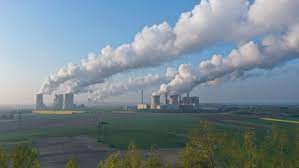
By-products of coal combustion are compounds which are released into the atmosphere as a result of burning coal. Coal includes contaminants such as sulfur compounds and non-combustible minerals. When coal is burned, the minerals become ash (i.e. particulate matter or PM) and the sulfur forms sulfur dioxide (SO2). Since air is mostly nitrogen, combustion of coal often leads to production of nitrogen oxides. Sulfur dioxide and nitrogen oxides are primary causes of acid rain. For many years—before greenhouse gasses were widely understood to be a threat—it was thought that these by-products were the only drawback to using coal. These by-products are still a problem, but they have been greatly diminished in most advanced countries due to clean air regulations. It is possible to remove most of the sulfur dioxide (SO2), nitrogen oxides (NOx), and particulate matter (PM) emissions from the coal-burning process. For example, various techniques are used in a coal preparation plant to reduce the amount of non-combustible matter (i.e. ash) in the coal prior to burning. During combustion, fluidized bed combustion is used to reduce sulfur dioxide emissions. After burning, particulate matter (i.e. ash and dust) can be reduced using an electrostatic precipitator and sulfur dioxide emissions can be further reduced with flue-gas desulfurization. Trace amounts of radionuclides are more difficult to remove. # ISO certification in India
Coal-fired power plants are the largest aggregate source of the toxic heavy metal mercury: 50 tons per year come from coal power plants out of 150 tons emitted nationally in the US and 5000 tons globally. However, according to the United States Geological Survey, the trace amounts of mercury in coal by-products do not pose a threat to public health.A study in 2013 found that mercury found in the fish in the Pacific Ocean could possibly be linked to coal-fired plants in Asia. # ISO certification in India
Potential financial impact
Whether carbon capture and storage technology is adopted worldwide will “…depend less on science than on economics. Cleaning coal is very expensive.” # ISO certification in India
Cost of converting a single coal-fired power plant
Conversion of a conventional coal-fired power plant is done by injecting the CO2 into ammonium carbonate after which it is then transported and deposited underground (preferably in soil beneath the sea).This injection process however is by far the most expensive. Besides the cost of the equipment and the ammonium carbonate, the coal-fired power plant also needs to use 30% of its generated heat to do the injection (parasitic load). A test-setup has been done in the American Electric Power Mountaineer coal-burning power plant.
One solution to reduce this thermal loss/parasitic load is to burn the pulverised load with pure oxygen instead of air.
Cost implications for new coal-fired power plants
Newly built coal-fired power plants can be made to immediately use classification of the coal prior to combustion. This makes it much easier to separate off the CO2 from the exhaust fumes, making the process cheaper. This classification process is done in new coal-burning power plants such as the coal-burning power plant at Tianjin, called “Green Gen”. # ISO certification in India