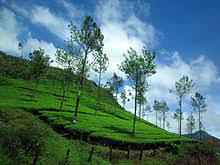
Eco-tour 02

Courtesy : Eco-tour Terminology and history A hanging bridge in ecotourism area of Thenmala, Kerala in India – India’s first planned ecotourism destination Ecotourism is a late 20th-century neologism compounded from eco- and tourism. According to the Oxford English Dictionary, ecotour was first recorded in 1973 and ecotourism, “probably after ecotour“, in 1982. Some sources suggest the terms were used nearly a decade earlier. Claus-Dieter (Nick)…
Read More

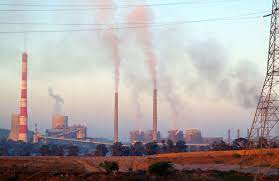
Eco-tour – 01

Courtesy : Eco-tour Ecotourism is a form of tourism involving responsible travel (using sustainable transport) to natural areas, conserving the environment, and improving the well-being of the local people. Its purpose may be to educate the traveler, to provide funds for ecological conservation, to directly benefit the economic development and political empowerment of local communities, or to foster…
Read More

Coal Emission 18

Courtesy : Coal Emission Health effects Even at levels lower than those considered safe by United States regulators, exposure to three components of air pollution, fine particulate matter, nitrogen dioxide and ozone, correlates with cardiac and respiratory illness. In 2020, pollution (including air pollution) was a contributing factor to one in eight deaths in Europe,…
Read More

Coal Emission 17

Courtesy : Coal Emission Exposure Up to 30% of Europeans living in cities are exposed to air pollutant levels exceeding EU air quality standards. Around 98% of Europeans living in cities are exposed to levels of air pollutants deemed damaging to health by the World Health Organization’s more stringent guidelines.…
Read More

Coal Emission 16

Courtesy : Coal Emission Secondary pollutants include: Minor air pollutants include: Persistent organic pollutants are organic compounds that are resistant to environmental degradation due to chemical, biological, or photolytic processes (POPs). As a result, they’ve been discovered to survive in the environment, be capable of long-range transmission, bioaccumulate in human…
Read More

Coal Emission 15

Courtesy : Coal Emission Emission factors Main article: AP 42 Compilation of Air Pollutant Emission Factors Beijing air in 2005 after rain (left) and a smoggy day (right) Air pollutant emission factors are reported representative values that aim to link the quantity of a pollutant released into the ambient air to an activity connected with…
Read More

Coal Emission 14

Courtesy : Coal Emission Sources of air pollution Anthropogenic (human-made) sources Aviation is a major source of air pollution. Controlled burning of a field outside of Statesboro, Georgia, in preparation for spring planting Smoking of fish over an open fire in Ghana, 2018 These are mostly related to the burning of fuel. There…
Read More

Coal Emission 13

Courtesy : Coal Emission Air pollution is the contamination of air due to the presence of substances in the atmosphere that are harmful to the health of humans and other living beings, or cause damage to the climate or to materials. There are many different types of air pollutants, such as gases (including ammonia, carbon monoxide, sulfur dioxide, nitrous oxides, methane, carbon dioxide and chlorofluorocarbons), particulates (both organic and inorganic), and biological…
Read More

Coal Emission 12

Courtesy : Coal Emission Radiation exposure Coal also contains low levels of uranium, thorium, and other naturally occurring radioactive isotopes which, if released into the environment, may lead to radioactive contamination. Coal plants emit radiation in the form of radioactive fly ash, which is inhaled and ingested by neighbours, and incorporated into crops. A 1978 paper from Oak…
Read More

Coal Emission 11

Courtesy : Coal Emission Mercury emissions In 2011 U.S. power plants emitted half of the nation’s mercury air pollutants. In February 2012, EPA issued the Mercury and Air Toxics Standards (MATS) regulation, which requires all coal-fired plants to substantially reduce mercury emissions. In New York State winds deposit mercury from the coal-fired power…
Read More
Translate »