
Courtesy : Energy star products
Enforcement
- Civil enforcement and Criminal enforcement programs
- Compliance assistance
- Federal activities (reviews of Environmental Impact Statements)
- Federal facilities enforcement
- Environmental Justice program
In 2019 the Environmental Data & Governance Initiative, “a network of academics, developers, and non-profit professionals”, published a report which compared EPA enforcement statistics over time. The number of civil cases filed by EPA have gradually decreased, and in 2018 the criminal and civil penalties from EPA claims dropped over four times their amounts in 2013, 2016, and 2017. In 2016 EPA issued $6,307,833,117 in penalties due to violations of agency requirements, and in 2018 the agency issued $184,768,000 in penalties. EPA’s inspections and evaluations have steadily decreased from 2015 to 2018. Enforcement activity has decreased partially due to budget cuts within the agency. # ISO certificate in India
Additional programs
- The EPA Safer Choice label, previously known as the “Design for the Environment” (DfE) label, helps consumers and commercial buyers identify and select products with safer chemical ingredients, without sacrificing quality or performance. When a product has the Safer Choice label, it means that every intentionally-added ingredient in the product has been evaluated by EPA scientists. Only the safest possible functional ingredients are allowed in products with the Safer Choice label.
- Through the Safer Detergents Stewardship Initiative (SDSI), EPA’s Design for the Environment (DfE) recognizes environmental leaders who voluntarily commit to the use of safer surfactants. Safer surfactants are the ones that break down quickly to non-polluting compounds and help protect aquatic life in both fresh and salt water. Nonylphenol ethoxylates, commonly referred to as NPEs, are an example of a surfactant class that does not meet the definition of a safer surfactant. The Safer Choice program identified safer alternative surfactants through partnerships with industry and environmental advocates. These alternatives are comparable in cost and are readily available. The Clean Gradients website is an information source about safer surfactants.# ISO certificate in India
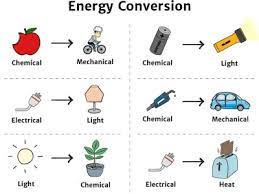
- The Energy Star program, initiated in 1992, motivated major companies to retrofit millions of square feet of building space with more efficient lighting. As of 2006, more than 40,000 Energy Star products were available including major appliances, office equipment, lighting, home electronics, and more. In addition, the label can also be found on new homes and commercial and industrial buildings. In 2006, about 12 percent of new housing in the US displayed an Energy Star label. EPA estimates that the program saved about $14 billion in energy costs in 2006 alone. The program has helped spread the use of LED traffic lights, efficient fluorescent lighting, power management systems for office equipment, and low standby energy use.
- EPA’s Smart Growth Program began in 1998 and was created to help communities improve their land development practices and get the type of development they want. Together with local, state, and national experts, EPA encourages development strategies that protect human health and the environment, create economic opportunities, and provide attractive and affordable neighborhoods for people of all income levels.# ISO certificate in India
- The Brownfields Program started as a pilot program in the 1990s and was authorized by law in 2002. The program provides grants and tools to local governments for the assessment, cleanup, and revitalization of brownfields. As of September 2015, the EPA estimates that program grants have resulted in 56,442 acres of land readied for reuse and leveraged 116,963 jobs and $24.2 billion to do so. Agency studies also found that property values around assessed or cleaned-up brownfields have increased 5.1 to 12.8 percent.
- EPA’s Indoor Air Quality Tools for Schools Program helps schools to maintain a healthy environment and reduce exposures to indoor environmental contaminants. It helps school personnel identify, solve, and prevent indoor air quality problems in the school environment. Through the use of a multi-step management plan and checklists for the entire building, schools can lower their students’ and staff’s risk of exposure to asthma triggers.# ISO certificate in India
- The National Environmental Education Act of 1990 requires EPA to provide national leadership to increase environmental literacy. EPA established the Office of Environmental Education to implement this program.
- Clean School Bus USA is a national partnership to reduce children’s exposure to diesel exhaust by eliminating unnecessary school bus idling, installing effective emission control systems on newer buses and replacing the oldest buses in the fleet with newer ones. Its goal is to reduce both children’s exposure to diesel exhaust and the amount of air pollution created by diesel school buses.
- The Green Chemistry Program encourages the development of products and processes that follow green chemistry principles. It has recognized more than 100 winning technologies. These reduce the use or creation of hazardous chemicals, save water, and reduce greenhouse gas release.# ISO certificate in India
- The Beaches Environmental Assessment and Coastal Health (BEACH) Act, was authorized in a 2000 amendment to the Clean Water Act. The program focus is on coastal recreational waters, and requires EPA to develop criteria to test and monitor waters and notify public users of any concerns. The program involves states, local beach resource managers, and the agency in assessing risks of stormwater and wastewater overflows and enables better sampling, analytical methods, and communication with the public.
- The EPA has also established specific geographic programs for particular water resources such as the Chesapeake Bay Program, the National Estuary Program, and the Gulf of Mexico Program.# ISO certificate in India
- Advance identification, or ADID, is a planning process used by the EPA to identify wetlands and other bodies of water and their respective suitability for the discharge of dredged and fill material. The EPA conducts the process in cooperation with the U.S. Army Corps of Engineers and local states or Native American Tribes. As of February 1993, 38 ADID projects had been completed and 33 were ongoing
- EPA’s “One Cleanup Program” initiative was designed to improve coordination across different agency programs that have a role in cleanup at a particular site. The coordination efforts apply to the brownfields, federal facilities, USTs, RCRA and Superfund programs.
- EPA initiated its voluntary Water Sense program in 2006 to encourage water efficiency through the use of a special label on consumer products.# ISO certificate in India
- PFASs are organofluoride chemical compounds referred to as “forever chemicals”. In October 2021 EPA announced the PFAS Strategic Roadmap. This initiative is a “whole-of-EPA” strategy and will consider the full lifecycle of PFAS, including preventing PFAS from entering the environment, holding polluters accountable, and remediation of contaminated sites. It also will include drinking water monitoring and risk assessment for PFOA and PFOS in biosolids (processed wastewater sludge used as fertilizer). # ISO certificate in India